


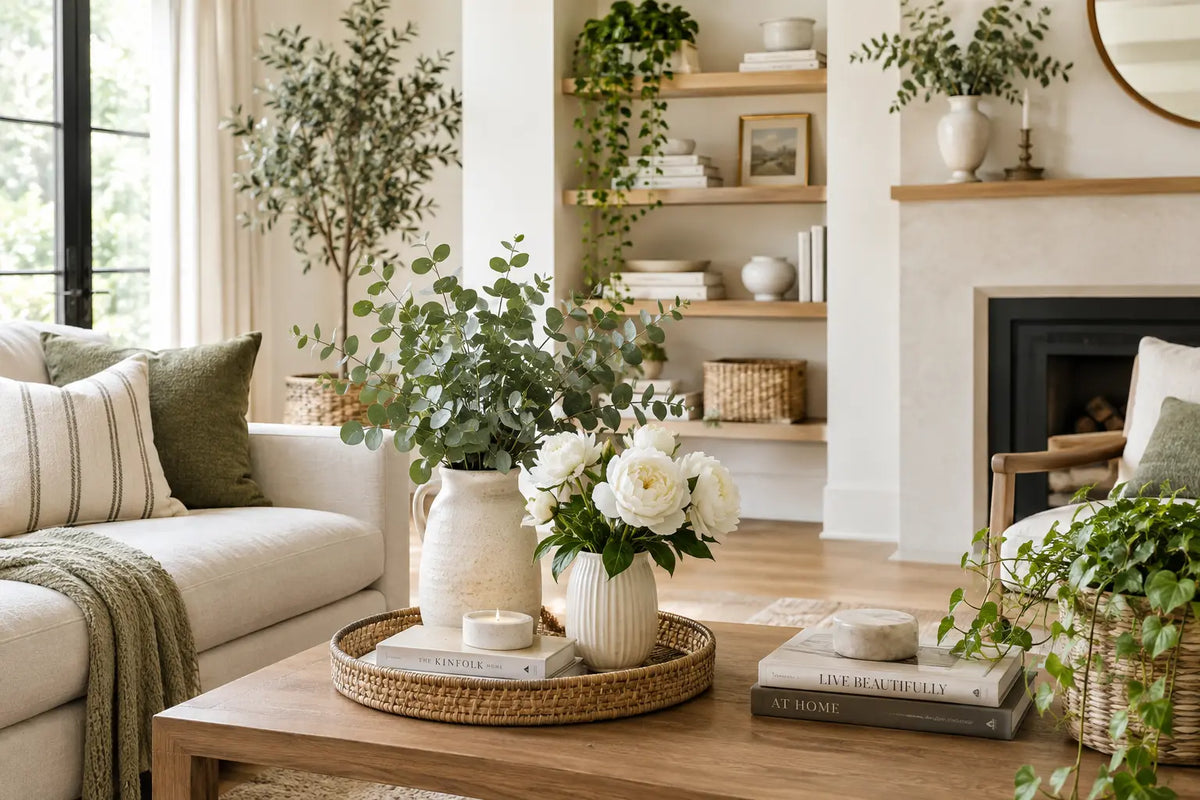
Artificial plants and flowers make it easier to style a room when you want greenery that looks polished without the upkeep of live plants. For shoppers browsing collection pages, the best choice usually comes down to three things: size, shape, and where the piece will sit. A taller plant can anchor a corner, a compact arrangement can finish a shelf or dining table, and trailing foliage can soften a wall or ledge. When you compare options by room and display height, it becomes much easier to choose décor that feels intentional in a home or office.
Shop the right artificial plants and flowers
Start by thinking about the space you want to decorate, not just the plant itself. A wide living room can take a fuller silhouette, while a smaller apartment or workspace often looks better with something compact and tidy. Product pages with different heights, pot styles, and foliage types make it easier to narrow the field fast. If you want a warm backdrop for modern interiors, look for pieces that can work as a focal point or as subtle filler. The right collection should help you compare options by placement, scale, and overall mood before you decide.
Choose by plant style and display height
Plant style and height shape the whole look of a room. Tall floor pieces create presence, medium-height designs add structure, and smaller items keep surfaces looking clean. An artificial areca palm plant can bring a soft, airy feel, while an artificial fiddle leaf fig usually reads bolder and more architectural. An artificial bonsai offers a more compact, sculptural look that works well when you want detail without bulk. The easiest way to browse is to match the plant’s silhouette to the spot you already have in mind, then decide how much visual weight it should carry.
Statement floor plants
Larger plants are useful when you need to fill an empty corner, define an entryway, or balance a seating area in the living room. Taller leaves and stronger vertical lines help a room feel finished quickly, especially in modern interiors that benefit from clear shapes. These options work well beside sofas, near windows, or next to consoles where the plant can frame the furniture instead of blending in. If the area feels bare from the start, a floor plant is usually the easiest way to add height without adding clutter.
Tabletop and compact options
Smaller artificial plants and flowers are a practical fit for desks, side tables, shelves, and a dining table. They add interest without blocking sightlines or crowding everyday use. In a home office, compact greenery can soften a workstation without making it feel busy. In apartments, a small potted piece often gives enough detail for the room to feel styled while still leaving room for books, lamps, or accessories. These options are especially helpful when you want a neat, low-maintenance accent that works in tight spaces.
Trailing and hanging designs
Trailing greenery is a smart choice when you want movement and softness from above or along the edge of a surface. An artificial hanging plant can ease the look of a shelf, brighten a wall corner, or add shape to a balcony edge without needing much floor space. Cascading designs are especially useful in narrow rooms where vertical interest matters more than width. If your display area already has tall furniture or wall décor, hanging foliage can break up the lines and make the setup feel more layered.
Match greenery to each room
The best match depends on how the room is used. A living room usually benefits from fuller plants that can act as visual anchors, while a dining area often needs lower pieces that stay out of the way. A home office calls for calm, tidy styling that adds warmth without demanding attention. Sideboards, shelves, consoles, and reception-like corners all give different cues about height and shape, so it helps to browse with the room’s function in mind. That approach makes it easier to picture how the décor will work in everyday use.
Living room styling
In the living room, larger plants help frame seating zones and fill corners that otherwise look unfinished. A fuller design can balance a sofa, add height beside a TV unit, or soften a blank wall without blocking movement. If the room already has strong furniture lines, a plant with a natural curve can keep the space from feeling too rigid. The goal is to create presence without crowding, so it helps to choose a shape that complements the room rather than competing with it.
Dining table and tabletop styling
For a dining table, lower arrangements work best because they decorate the space without interrupting conversation. Compact bouquets, small potted pieces, and short floral displays keep the surface feeling inviting and open. A centered arrangement can also help the table feel complete when it is not in use. If the dining area doubles as a work or family space, look for a piece that stays visually calm and easy to move when needed. Proportion matters more than size here, especially in shared spaces.
Home office and workspace décor
Artificial greenery is a simple way to warm up a home or office setup without needing water, light, or daily attention. Desk-friendly pieces can make a workstation feel more comfortable, while shelf décor adds softness behind cameras or around books. Clean shapes usually work well in workspaces because they support a tidy look. If the office already feels busy, choose one or two restrained accents instead of a crowded arrangement. The result is a more relaxed background that still feels polished.
Make faux greenery look realistic
Realism usually comes from small details rather than one dramatic feature. Look closely at leaf texture, edge shape, and color variation, since flat color and overly uniform leaves can make a piece feel less convincing. Pot quality matters too, because the base affects how finished the display looks. Flexible stems can help the plant sit more naturally, especially if you want to adjust the shape after unboxing. Proportion is just as important as appearance; a plant that fits the space well often looks more believable than one that is simply large.
Detail, texture, and finish
Subtle color shifts and natural-looking edges usually make foliage feel more lifelike. Leaves that vary slightly in size or tone often look closer to real plants than overly repetitive designs. The same idea applies to flowers, where gentle variation can prevent the arrangement from appearing too uniform. Scale should also match the setting. A well-sized piece on a console or shelf will often look more natural than an oversized display that overwhelms the area.
Placement and styling tricks
You can make faux greenery feel more intentional by styling it with planters, books, trays, or other simple accessories. Layering a plant with nearby décor helps it look integrated into the room rather than placed there by accident. In a living room, a tray or stack of books can ground a smaller arrangement. On a shelf, a plant beside framed objects adds balance and shape. These small choices help the display read as part of the room’s design, not just a product on a surface.
Maintain artificial plants with minimal effort
One of the main advantages of artificial plants and flowers is the easy upkeep. Basic care usually means light dusting and gentle cleaning according to the manufacturer’s instructions. If a piece will sit near a window or in brighter light, it can be worth checking whether the materials are suitable for that placement and whether occasional rotation might help the look stay even. The routine is simple, which makes these pieces practical for busy homes, offices, and spaces where low-maintenance décor matters most.
Find the best fit for your space
When you browse by room, height, realism, and placement style, it becomes much easier to find a piece that feels right the first time. Collection pages are especially useful because they let you compare several options side by side instead of judging one product alone. If you are styling a living room, dining table, or office corner, start with the space you need to fill and narrow from there. Then compare the shapes, pots, and sizes that fit best, and choose the option that suits your room’s final look.


