


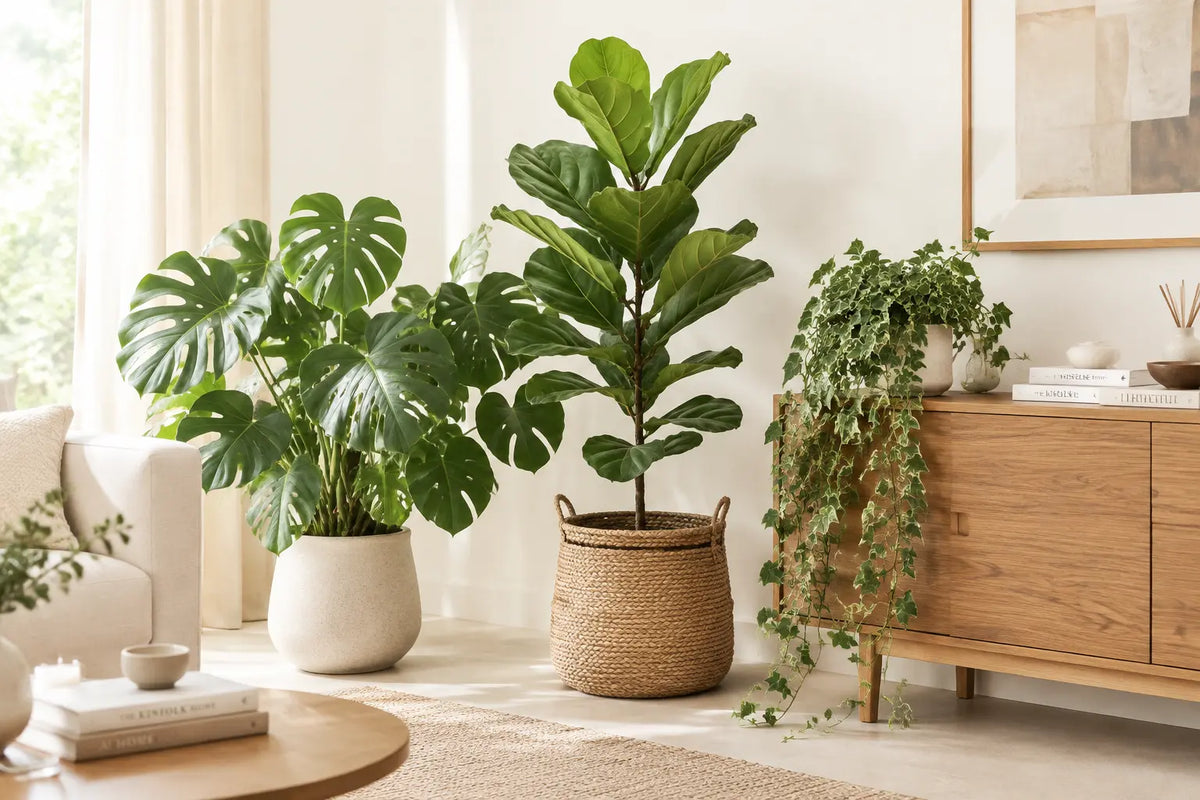
Artificial greenery can change the mood of a room quickly, especially when you want a polished look without the upkeep of live plants. The best indoor artificial plants do more than fill a corner; they help shape the room, soften hard edges, and add colour to any space in a way that feels intentional. Whether you are styling a living room, a dining area, a home office, or a compact apartment, the right choice depends on scale, finish, placement, and the level of realism you want. Start with the room you use most, then build around its light, layout, and furniture height.
Choose the right indoor artificial plants for your space
Think first about where the plant will live. A bright living room can handle a taller statement piece, while a bedroom or study often looks calmer with a smaller accent. In dining areas, keep the arrangement open and low so the table still feels usable. Rooms with less natural light are often the easiest places for artificial plants, because you can focus on shape and proportion instead of light needs. In a home or office setting, the goal is to make the greenery look like it belongs rather than compete with the furniture.
Match plant style to room scale
Compact pieces work best when the room already has a lot going on, such as a busy bookshelf, a narrow side table, or a small entry ledge. Taller designs make more sense in open rooms where the eye needs a vertical focal point. Leaf size matters too: broad leaves can feel bold and architectural, while finer foliage can look lighter and more relaxed. A simple rule is to let the plant balance what is already in the room, not fight it.
Pick finishes that look natural
The most convincing artificial plants usually have a mix of realistic leaf texture, subtle colour variation, and a trunk or stem that does not look overly glossy. Small imperfections often help the plant feel more believable because real greenery is never perfectly uniform. If a piece will sit in the living room or another main area, quality becomes more important than anywhere else, since people will see it up close and from multiple angles.
Use statement plants to anchor modern interiors
A single large plant can do the work of several smaller accents when you want a cleaner, more modern room. Place it where the eye naturally lands: beside a sofa, near an entry console, or in an empty corner that needs definition. The right statement piece adds structure without clutter, especially in contemporary spaces that rely on open sightlines and simple furniture. It can also help a large room feel less bare by creating a clear visual anchor.
Place artificial floor plants in empty corners
Artificial floor plants are useful for softening the hard lines of media units, armchairs, and straight wall edges. In open-plan layouts, they can break up long stretches of flooring and make the room feel more finished. A tall plant beside a sofa or near a reading chair adds height without needing extra furniture, which is especially helpful when you want a calm but styled look.
Feature areca palm, fiddle leaf, and bird of paradise styles
An artificial areca palm suits relaxed interiors because its feathery silhouette feels airy and easygoing. An artificial fiddle leaf brings a cleaner, sculptural shape that works well with modern furniture and simpler colour palettes. A bird of paradise style gives a more tropical, energetic feel, which can brighten a corner that needs visual drama. Each one changes the mood of the room without requiring a different decorating scheme.
Decorate living rooms with layered greenery
The living room is usually where artificial greenery has the biggest impact, so layering matters. Instead of using one plant in isolation, mix heights to create depth around sofas, consoles, and corners. A tall plant can balance a large wall or window, while medium and smaller pieces help fill gaps at eye level and below. The aim is to make the greenery feel integrated with the seating arrangement, not dropped in as an afterthought.
Create balance around sofas and consoles
Symmetrical styling works well when the room feels formal or tidy, such as placing matching pieces at each end of a console. Asymmetrical arrangements feel more relaxed and often suit modern living rooms better, especially when one side needs a taller plant and the other only needs a low accent. Use one strong piece, then add smaller forms nearby only if the room still feels unfinished.
Use shelves, side tables, and corners for accents
Smaller artificial plants are ideal for shelves, side tables, bookcases, and window edges because they bring colour without taking up floor space. These placements are useful when you want a room to feel layered but not crowded. A small potted plant on a sideboard, for example, can connect the furniture to the rest of the decor and keep the composition from feeling too rigid.
Style dining tables and display surfaces
Dining tables and coffee tables need lighter styling than floor areas, so keep arrangements compact and easy to move. A low artificial plant can add freshness without blocking conversation or making the surface feel busy. On consoles and sideboards, a small grouping can look elegant if the shapes and containers feel coordinated. The best result is calm, open, and easy to clean.
Choose low arrangements for easy conversation
For a dining table, keep the arrangement low enough that people can see across it comfortably. Rounded or spread-out shapes work well because they sit quietly in the centre instead of towering over place settings. This approach also suits everyday use, since the table still feels practical for meals, work, or hosting.
Mix pots, vases, and grouped stems
Simple combinations often look more curated than a single oversized item. A neutral pot, a textured vase, or a small cluster of stems can create a finished look on a coffee table or console. Choose container finishes that echo nearby decor, such as matte ceramic for modern rooms or woven textures for softer interiors.
Add movement with hanging and wall-mounted greenery
When floor space is limited, elevated greenery can add depth without making the room feel crowded. Trailing shapes work especially well above shelves, near windows, or in corners that need softness. They also help connect different levels of the room, from eye level down to the furniture line, which makes the whole space feel more layered.
Try artificial hanging plant arrangements
An artificial hanging plant can soften hard architecture and bring life to compact rooms without taking up valuable surface area. It works well where you want a gentle trail of greenery rather than a large focal point. Above a shelf or near a window, the hanging form adds movement and helps the room feel less static.
Use wall features to add softness
Wall-mounted greenery should support the room, not overpower it. A small vertical arrangement beside art, shelving, or a mirror can make the wall feel less flat and connect different decor levels in one view. This is especially useful in modern interiors that rely on clean lines and need a little visual relief.
Make artificial plants look convincing
The easiest way to improve realism is to finish the base properly. A decorative planter, pebbles, moss, or a weighted pot can change how the whole piece reads in the room. Keep surfaces clean and rotate pieces occasionally so they continue to look fresh from the main seating angle. If sunlight hits the plant directly, place it with care so the finish stays consistent over time.
Improve realism with pots and fillers
Good container choice matters as much as the plant itself. A sturdy pot gives the arrangement presence, while fillers help hide obvious plastic cues at the base. For a more natural effect, choose materials that suit the room style rather than a container that feels disconnected from the furniture around it.
Maintain colour, shape, and dust-free appeal
Light dusting is usually enough to keep artificial plants looking neat, especially in busy rooms or office spaces. If the leaves flatten or shift, a quick repositioning can restore the shape. Over time, simple care helps the arrangement keep its colour and visual crispness without demanding ongoing attention.
Use plant styles that suit different interiors
Different plant silhouettes create different moods, so match the shape to the room personality. Structured, compact forms suit neat spaces, while broader tropical shapes feel more relaxed and expressive. Think about whether you want the greenery to disappear into the decor or stand out as part of the room’s design language.
Choose bonsai for calm, structured decor
An artificial bonsai works well on desks, shelves, and side tables because it brings a sense of order without taking much space. It feels especially suitable for minimalist rooms or tidy work areas where small details matter. In a home or office setting, it can add a refined touch without interrupting the overall layout.
Choose tropical shapes for a bolder look
Lush forms are useful when a room needs more energy or a stronger focal point. Palm-like silhouettes and broad leafy styles can lift a living room and soften the edges of open-plan interiors. They also pair well with simple furniture because the plant becomes part of the room’s visual rhythm.
Wrap up with a simple room-by-room styling plan
Start with one visible spot, such as a corner, console, or dining surface, and choose the plant size that suits that area first. Once the focal point feels balanced, add smaller accents only if the room needs more depth. That approach keeps decorating simple and helps indoor artificial plants look deliberate from the start.
Build from one focal point
Begin with the area people notice first, then layer greenery gradually. A single well-placed piece usually does more for the room than several small items chosen too quickly. Once the main view feels right, the rest of the styling becomes easier and more confident.


